
Climate Change Commission’s draft report

Climate Change Commission’s draft report

Terry Baucher looks at some of the taxation ramifications from the Climate Change Commission’s draft report

The Climate Change Commission released its draft advice for consultation on 31st January. What of note did it have to say about the role of taxation?

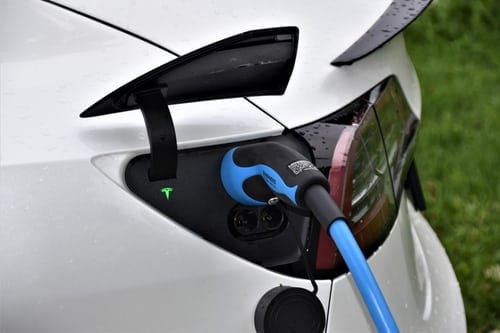
The Commission’s Necessary Action 3 recommended accelerating light electric vehicle (EV) uptake.  As part of this it suggested the Government:

Evaluate how to use the tax system to incentivise EV uptake and discourage the purchase and continued operation of ICE [internal combustion engine] vehicles.

As the Commission is no doubt aware taxes can have significant behavioural changes very quickly as the following example of the changes in the United Kingdom’s Landfill Tax illustrates.

Between its introduction in 1996 and 2016 the rate of Landfill Tax was increased from just under £10 a tonne in 1996 to nearly £90 a tonne by 2016. Over that 20-year period the annual amount of waste landfill fell from 50 million tonnes to 10 million tonnes.

So what tax changes could be used to incentivise change?

The available evidence indicates that the present fringe benefit tax (FBT) rules are unintentionally environmentally harmful. A NZ Transport Agency report in 2012 examining the impact of company cars found they were heavier with higher engine ratings than cars registered privately. The availability of employer-provided parking encouraged longer commutes from more dispersed, automobile-dependent locations than would otherwise occur.  Under present rules employer-provided parking is largely exempt from FBT.

The trend for larger, heavier vehicles has accelerated since 2012 with a greater preference for vehicles such as SUVs and utes. Last year 77% of all new passenger vehicle registrations were SUVs and utes.

A by-product of the trend for purchasing of twin-cab utes appears to be widespread non-compliance with the existing FBT rules. This is in part because of an incorrect perception that such vehicles automatically qualify for the “work-related vehicle” exemption from FBT. The combination of greater numbers of such vehicles and apparent under-enforcement of the FBT regime[1] exacerbates the trend for indirectly environmentally harmful practices identified by the NZTA in 2012.

Inland Revenue should therefore immediately increase its enforcement of the FBT rules relating to twin-cab utes. These changes should be allied with the adoption of the approach in Ireland and the United Kingdom where FBT is greater on higher emission vehicles. I consider these emission-based FBT rules can be adopted relatively quickly, and it ought to be possible to have these in place by 31st March 2023.

As an interim measure to encourage greater take up of EVs the Government could consider exempting EVs from FBT until the new emission-based FBT rules are in place.  In Ireland, EVs with an original market value below €50,000 are presently exempt from FBT. The threshold here could be $50,000.

Additional FBT related measures include increasing the application of FBT on the provision of carparks to employees and not taxing the provision of public transport to employees. This reverses the present treatment and fits better with a policy of decarbonisation without impacting an employer’s ability to provide such benefits.

Taxing the provision of employer-provided carparks could raise significant funds. The 2012 NZTA report estimated the annual value of free parking in Auckland to be $2,725. With at least 24,000 employer owned car parks in the city this amounted to a tax-free benefit of $65 million per annum. FBT is generally charged at 49% of the value of the benefit so the potential FBT payable could be between $75 and $100 million per annum.

The suggested FBT changes should change behaviour, but as the Commission also pointed out we need to reduce emissions. We have one of the oldest vehicle fleets in the OECD and it is getting older. The average age of light vehicles in Aotearoa New Zealand increased from 11.8 years to 14.4 years between 2000 and 2017.[2] Compounding this issue, the turnover of the vehicle fleet is slow, on average vehicles are scrapped after 19 years (compared with about 14 years in the United Kingdom). 

Furthermore, we are one of only three countries in the OECD without fuel efficiency standards. As a result the light vehicles entering Aotearoa New Zealand are more emissions-intensive than in most other developed countries. For example, across the top-selling 17 new light vehicle models, the most efficient variants available here have, on average, 21% higher emissions than their comparable variants in the United Kingdom. They are also less fuel efficient, burning more fuel and therefore generating higher emissions. The Ministry of Transport estimated if cars entering Aotearoa New Zealand were as fuel efficient as those entering the European Union, drivers would pay on average $794 less per year at the pump.

The Commission is concerned about the impact of its proposals on low-income families, who could be asked to bear a disproportionate part of the costs of change. For this reason, I suggest the funds raised from the FBT changes should be first applied to a vehicle exchange programme. This would remove older higher-emitting vehicles (say ten or more years old) by subsidising purchase of newer vehicles (maybe from car rental companies with excess stock).

If it seems counter-intuitive to subsidise “old carbon” technologies there are three short-term benefits to consider: newer cars generally have lower emissions, are more fuel efficient and are safer, indirectly helping reduce the road toll. This scheme also supports the most vulnerable families who cannot rely on public transport and are most likely have older, less fuel-efficient vehicles. Furthermore, funds involved would go further than if applied in directly subsidising the purchase of electric vehicles.

I also suggest the buy-back scheme is targeted at lower-income families and should therefore be means-tested.  A starting threshold might be the Working for Families tax credits threshold of $42,700 above which abatement applies. This threshold could be increased if the vehicle is more than, say, 15 years old with accelerated rates applying if the car is more than 19 years old (i.e. older than the life expectancy of the average car in Aotearoa New Zealand).

The Commission has opened the debate on our transition to a greener, low-emissions economy. Tax will have a major role in that as Pascal Saint-Amans, the Director of the OECD’s Centre for Tax Policy and Administration acknowledged last year when he suggested that when responding to the impact of Covid-19.

Governments should seize the opportunity to build a greener, more inclusive and more resilient economy. Rather than simply returning to business as usual, the goal should be to “build back better” and address some of the structural weaknesses that the crisis has laid bare.

A central priority should be to accelerate environmental tax reform. Today, taxes on polluting fuels are nowhere near the levels needed to encourage a shift towards clean energy. Seventy percent of energy-related CO2 emissions from advanced and emerging economies are entirely untaxed and some of the most polluting fuels remain among the least taxed (OECD, 2019). Adjusting taxes, along with state subsidies and investment, will be unavoidable to curb carbon emissions.

The 2019 Tax Working Group (the TWG) chaired by Sir Michael Cullen undertook a review of environmental taxation and made several significant recommendations in its final report.

Unfortunately, the backlash against the TWG’s proposed capital gains tax meant that its commentary and proposals on environmental taxation were overlooked.

Nevertheless, the TWG’s groundwork in this area now needs to be built on. It’s therefore interesting to note that in its briefing to the new Minister of Revenue David Parker Inland Revenue noted one of its top tax policy priorities was “the role of environmental taxes and what an environmental tax framework should look like.”

Given that David Parker is also the Minister for the Environment I suggest Inland Revenue might be accelerating its work in this field, if the goals suggested by the Climate Change Commission are to be met. Watch this space.


[1] FBT is tied to employment. Over the 10 years to 30th June 2020 the amount of PAYE collected by Inland Revenue rose by almost 66% from $20.5 billion to $34 billion. However, over the same period the amount of FBT paid rose 28% from $462 million to $593 million. This gap suggests some level of under-reporting and enforcement.

[2] By comparison in the United States in 2016 it was 11.6 years for cars and light trucks and 10.1 years for all vehicles in Australia for the same year and 7.4 years for passenger cars in Europe in 2014 (Ministry of Transport data)

A look ahead at the expected big tax themes in the coming year

  • A look ahead at the expected big tax themes in the coming year.
  • The arguments for taxing property, a wealth tax, what might Joe Biden’s presidency mean for international environmental taxation and how will Inland Revenue respond.

Transcript.

Welcome to 2021. So what lies ahead in the tax world this year? Well, firstly, housing will remain an issue and I expect we will see steady calls for radical action on this front, including a demand for a capital gains tax. I actually think it’s gone beyond the point at which a CGT would have an impact.

In terms of tax measures, as I’ve said previously, restricting interest deductions including applying the existing thin capitalisation rules to investment properties might help to even the playing field between investors and first-time buyers, a group to which the Government appears to be paying particular attention.

Susan St. John has called for the Risk-Free Rate of Return (which is similar to the Foreign Investment Fund fair dividend rate rules) to apply to investment property. And her suggestion was recently echoed by Professor Craig Elliffe, who was a member of the Tax Working Group.

The Tax Working Group looked seriously at the question of applying a Risk-Free Rate of Return to investment property.  It estimated the revenue from applying a rate of 3.5% would be approximately $1 billion in the first year and was expected to rise to $2 billion per annum within 10 years. The expectation would be that such a move would,

“tax a currently undertaxed asset class more adequately and act as a curb to burgeoning house prices. Westpac economist, Dominick Stephens calculates that a 10 per cent CGT would reduce house prices by nearly 11 per cent. It is unclear what effect the RFRM, but it should stem the increase. But it’s not clear what effect a Risk Free Rate of Return method would have, but it should stem the increase.”

Now, tied to the question of housing is the issue of wealth inequality, and I expect we will continue to see calls for a wealth tax. Over in the UK just before Christmas, their Wealth Tax Commission released a report recommending a one off wealth tax for the UK, which it estimated could raise about £260 billion over five years. What was particularly interesting about this commission is the depth of the research into the topic.

Quite apart from the final report, the Commission produced a series of other working papers on the design and operation of wealth taxes around the world. And these, in the commission’s own words,

“represents the largest repository of evidence on wealth taxes globally. To date, it comprises half a million words across more than 30 papers covering all aspects of wealth, tax design and both in principle and practice.”

Just to put that in context, I estimate the Tax Working Group’s consideration of wealth taxes amounted to perhaps 10,000 words in total. So we are looking at a very significant amount of research.

Now, one other thing to keep in mind about the British Wealth Tax Commission was that it called for a wealth tax, even though the United Kingdom has a capital gains tax and an inheritance tax. Instead, it recommended a thorough review of those existing taxes.  The Commission also went for a one-off tax rather than an annual wealth tax, which is the common type of wealth tax currently and what the Greens propose.  The Commission saw that there were quite a few practical issues around the operation and an ongoing wealth tax.  These issues together with political pressure, has meant that the use of wealth taxes has declined throughout the OECD.

The Tax Working Group also concluded that an annual wealth tax would have enormous practical issues in implementation, which is why it did not recommend it.

But what the Wealth Tax Commission’s research makes clear is just how unique New Zealand’s approach to the taxation of capital is. It’s well known that New Zealand does not have a comprehensive capital gains tax, but that’s not entirely unique within the OECD. Switzerland, for one, does not have a capital gains tax.

Where New Zealand is unique, is that it does not have comprehensive taxation of capital in any form. Switzerland has a comprehensive wealth tax. In fact, the tax it raises from wealth taxes represents one per cent of GDP, which is the highest of any country with a wealth tax. Wealth tax revenue amounts to 4% of the Swiss tax take so it’s an important part of the Swiss tax system,

Wealth taxes in the OECD do not raise significant amounts of revenue and that’s one of the reasons they’ve been declining in use. The Wealth Tax Commission’s papers are well worth reading. A particularly interesting one is about the political economy of the abolition of wealth taxes in the OECD, which those who want to promote taxation changes would do well to read closely.

I think pressure will continue to mount on the Government on the taxation of wealth because of this ongoing anomalous position where we don’t tax capital on transfers by way of an inheritance tax or even a stamp duty, and not tax increases in value generally will feed into the debate around inequality.

And there’s an interesting point a client made to me on this topic. It’s been a long-standing New Zealand policy to attract high net worth individuals to come to New Zealand. Such immigrants may well qualify for a four-year tax holiday on their non-New Zealand investment income. These people being wealthier tend to have very diverse investment portfolios.

So anyway, the taxation of wealth, whether through a capital gains tax and/or a wealth tax or some other mechanism, is going to remain on the agenda.

A week before the British Wealth Tax Commission issued its report, our Government declared a climate change emergency, joining 32 other nations who have made such a declaration.

Now in my first podcast of last year, I said that the role of environmental taxes as one of the tools in the meeting our emissions targets will become ever more important.  And that remains the case.

But we now have a new American president, and one of the first actions of President Biden after his inauguration was an executive order confirming the United States would re-join the 2015 Paris agreement. Now, several people have pointed out this may well act as an indirect trigger for the government to take further action on reducing emissions.

More than a few columns have pointed out that there is a discrepancy between the government’s declared intentions and the actual steps being taken to reduce emissions and meet our commitments under the Paris agreement. One estimate is that New Zealand exceeded its national share of consumption-based emissions by more than a factor of 6.5.

So this year I expect we should start to see some movement on taxing emissions more thoroughly and a place they might well start because the transport sector is the biggest source of emissions is to change the taxation of motor vehicles, maybe by following the UK’s example of applying FBT on the basis of emissions.

The government should also look at eliminating anomalies in the tax system, which effectively penalise low carbon activities such as employers paying FBT on providing free public transport. Another would be as a paper prepared for the NZTA suggested was maybe applying FBT to employer provided parking.

Biden’s inauguration could mean swifter resolution to the issue of international taxation. I think this is one where we will have to wait and see because there will be fierce lobbying in the US by the so-called GAFA –  Google, Apple, Facebook and Amazon. I think progress will be made, but it will be slower than people expected.

And finally, the third trend I think we’ll see this year is Inland Revenue coming out from its rather inward-looking attitude in recent years as it completes the final stage of its controversial Business Transformation programme. With the immediate requirement to respond to the COVID pandemic now over, (please people remember to scan) Inland Revenue can get back to its more regular work.

Already before Christmas we started to see a number of new initiatives including one in relation to following up on the information Inland Revenue received under the Common Reporting Standards on the Automatic Exchange of Information.

Another is reviewing all transactions potentially within the bright-line test. You may recall that Inland Revenue fired out emails to tax agents advising “These clients appear to have made transactions within the bright-line test” which caused quite a stir. I expect we’ll see more work going into that space, which coming back to the start of the podcast ties into the taxation of property.

And finally, I think we’ll also see more activity going after the so-called cash economy. I think we’ll see Inland Revenue start following up on cash transactions, such as tradies offering a discount for cash.

So we’re going to have a busy year ahead, as always, and I will bring you the news as it develops. Next week, I’ll take a closer look at Inland Revenue, and its annual report which was released just before Christmas.

In the meantime, that’s it for today. I’m Terry Baucher and you can find my podcast on website www.baucher.tax or wherever you get your podcasts. Thank you for listening. And please send me your feedback and tell your friends and clients until next week, Ka kite āno.